Friday, November 15, 2019

South of the Sun - sparkle behind the scenes!


Faerie News 

South of the Sun - 

Australian fairy tales for the 21st century


Our anthology, South of the Sun - Australian fairy tales for the 21st century, is building a vibrant community and we've extended our call for entries until 13th December to encompass this expanding interest. Due on Serenity Press (in WA) 2020, it’s for YA + adult readership, rated G. Featuring original contributions by internationally acclaimed guest authors, with lush illustrations, it reflects intercultural inventiveness and overturns stereotypes (e.g. Eurocentricity or passive heroines). Here are some snippets about contributors so far. Please help spread the word of our campaign with a signal boost among your networks - thank you x

Pozible campaign (with video!)


South of the Sun - Australian fairy tales of the 21st century
anthology front cover art
by Lorena Carrington


Who we are...


Our Anthology Subcommittee is a branch of the Australian Fairy Tale Society.

Patricia Poppenbeek (author, editor, Anthology Chair, leader of the Vic Fairy Tale Ring)
Louisa John-Krol (fey bard, anthology secretary, former president of Australian Fairy Tale Society)
Lorena Carrington (photographic illustrator, chief of anthology art in this book)
Kathryn Gossow (novelist, poet, anthology social media manager)
Gabi Brown (author, former BBC radio producer, anthology committee member)
Dr Rebecca-Anne Do Rozario (jeweller, fairytale scholar, author, anthology committee member & Editor of the Australian Fairy Tale Society's Ezine)

Folklorists & other fairytale enthusiasts might be intrigued by this article - Introduction: The state of play in Australian fairy tale: Where to now? - by three fairy tale scholars who've served on AFTS committees: Dr Nike Sulway, Dr Belinda Calderone and Dr Rebecca-Anne Do Rozario, who is writing our Anthology’s foreword.

A little more about each of us, followed by our early guest contributors:

Patricia Poppenbeek:


Patricia (Patsy) Poppenbeek
Author, Chair & Editor of several anthologies
& Leader of the Victorian Fairy Tale Ring
(a state branch of the Australian Fairy Tale Society)
Patsy conversing with an imp
by the name of Tim Tit Tot,
also known as Duffy, Tremotino,
Rumpelstiltskin and other
illustrious titles

Louisa John-Krol:


Louisa John-Krol 
Welsh-Australian singer 
on French fairy-world label
Prikosnovenie


Louisa (me) as a Wonderwings Fairy Shop storyteller 1990s


Lorena Carrington:


Lorena Carrington
Photographic-Illustrator


recent book covers by photographic illustrator, Lorena Carrington

imagery by Lorena Carrington, from Vasilisa the Wise


Kathryn Gossow:


Kathryn Gossow, 
author of Cassandra


For my Review of Kathryn's mysterious, haunting, Aurealis shortlisted novel Cassandra (Odyssey Books), click on this link and scroll past fey promo, from music to puppetry and unicorns. This novel is gathering excellent 5-star reviews online, and is among our Rewards at Pozible.


Gabi Brown:


Gabi Brown
author & former BBC radio producer


Dr Rebecca-Anne Do Rozario:

Definition of fairy tales by Dr Rebecca-Anne Do Rozario, at AFTS’ website 

Dr Rebecca-Anne Do Rozario 
fairytale scholar, jeweller
& author of the academic gem:
Fashion In The Fairy Tale Tradition
- What Cinderella Wore


four-leaf clover Rebecca-Anne found
Fashion In The Fairy Tale Tradition -
What Cinderella Wore

by Dr Rebecca-Anne Do Rozario


Other contributors so far include Leila Honari and Marianna Shek, of Iranian-Australian and Chinese-Australian heritage respectively, who together produced The Stolen Button:

A glimpse of Pomelina the Pomegranate fairy
by Leila Honari
for a Persian-Australian fairytale by
Welsh-Australian Louisa John-Krol
Leila Honari
Marianna Shek
Click here for my review of their book The Stolen Button 

The Stolen Button by Marianna Shek & Leila Honari


Louisa's photo of The Stolen Button


Thang Dac Luong
author of 
Refugee Wolf
Website


Thang Dac Luong was interviewed here at this blog, with a review of his poignant, satirical novella, Refugee Wolf, an abridged version of which features in our forthcoming anthology.


Thang Dac Luong
researching the life of his father,
a persecuted journalist who fled
to Australia after the Vietnam War


Eugen Bacon, author
Eugen Bacon
an African-Australian award-winning writer of speculative fiction with genre-crossing forays into astonishing hybrids of magic-realism, poetry, sci-fi, fairytale and fantasy...

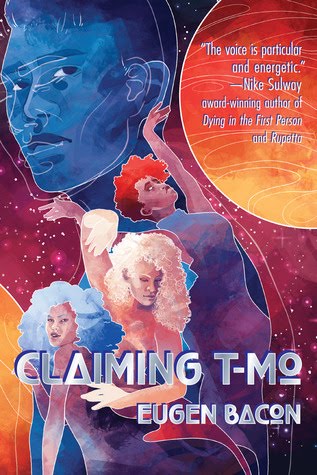
Eugen's novel 'Claiming To-Mo' (Meerkat Press) is among our Rewards in our Pozible campaign. You can also hear her lush voice in our video there!


Visit her Website and explore her other titles too!

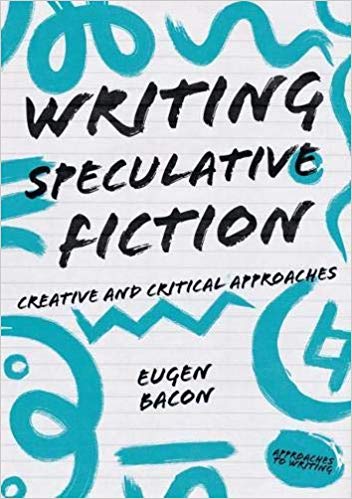
Here's my Review of her book Writing Speculative Fiction - Creative and Critical Approaches (Macmillan International).


Reilly McCarron 
Celtic Faerie Bard

co-founder of the Australian Fairy Tale Society
dwelling on a magic mountain near Sydney
- the South of the Sun anthology features her lyrics!


Monique Mulligan
author in Western Australia
Monique Mulligan


Monique Mulligan

contributes an eerie tale that's actually a preview 
of her forthcoming novel...


'Why not use creativity to get the better of self-doubt?'
- Monique Mulligan


Spike Deane
fairytale glass artist

at Canberra Glassworks, ACT,
is among our visual contributors

Spike's Website
Spike's Patreon page


Art by glass artist Spike Deane

Debra Phillips, visual artist
Debra Phillips


Jo Henwood
storyteller

co-founder & Ring Maiden
of the Australian Fairy Tale Society
founded in Sydney


Erin Claire Barrow, illustrator based in Canberra
Book & swap-cards by Erin-Claire Barrow


Cindy-Lee Harper at Fitzroy Gardens
Cindy-Lee Harper, accomplished storyteller & blogger-bard

graces our anthology as a special guest. Welcome to her blog.
This photograph shows her sharing a tale from her ancestry, part of which she traces to the Pyemarriner people of Tasmania.


Claudia Barnett, fairytale scholar

Claudia Barnett
author, fairy tale scholar & former Editor of the Australian Fairy Tale Society Ezine, has contributed a tale set on the Goldfields. Eureka! This victory salute is widely regarded as the birth-cry of Australian democracy.


Kathleen Jennings, illustrator
Illustration by Kathleen Jennings


Other guests include Sophie Masson, who has published widely across major publishing houses, and recently won an Order of Australia for Services to Literature; and Carmel Bird, recipient of the Patrick White Award, one of Australia's most prestigious prizes. Articles praising or interviewing both appeared in this blog:
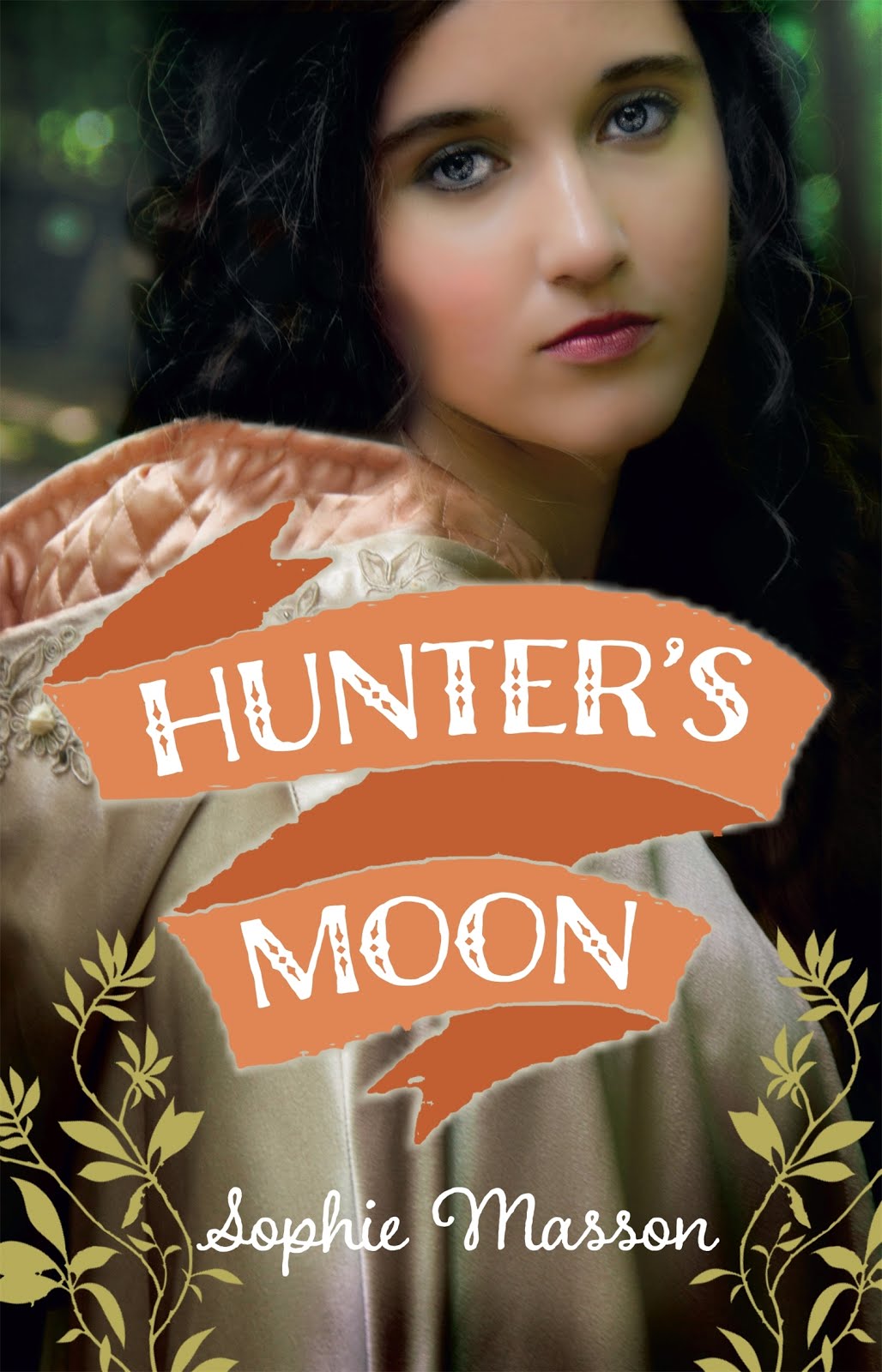

Hunter's Moon
by Sophie Masson
Review of Hunter's Moon - novel by Sophie Masson
(with Interview)

Review of Child of the Twilight - novel by Carmel Bird

Child of the Twilight
by Carmel Bird


Carmel Bird

Sophie Masson


Sophie Masson


A glimpse of our official promo
(as in, not the rambling wild briars of this fairy blog)


Entries close 13th Dec 2019!

Australian Fairy Tale Society members, please note that our Anthology contact email for submissions is separate from those of central AFTS admin & AFTS Ezine gmails:
Anthology Email

Please watch our video at Pozible & share this news. 
Every little boost helps, 


Monday, November 11, 2019

CD Reviews: Le Monde Saha, Babel & Through a Sylvan Doorway

Faerie Reviews


A peculiarity of this Blogspot menu is to denote headings as dates, not titles. So I sometimes lose track of posts. Fortunately, these albums are so fantastic that it won't matter if I duplicate my appraisal of them here, at Australian Fairy Review:

Albums of appraisal in this post are Le Monde Saha by Nehl Aëlin, Babel by Rajna and Through a Sylvan Doorway by Spiral Dance.
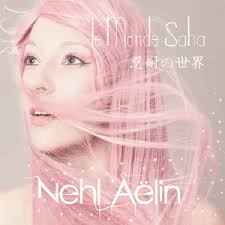
Nehl Aëlin


Le Monde Saha 

by Nehl Aëlin

France


Label: Danse Macabre 


Japanese mysticism meets French cabaret in sparkling melodic, vocal interplay. This is sensual, lush, avant-garde, daring, luminous indie-pop. Style refs for Nehl Aëlin: Camille, Kate Bush, Olivia Ruiz, Nico, Emilie Simon, Tori Amos, Cocteau Twins (especially in sylvan, impish vocals), and perhaps for millennials, Florence and the Machine. Inspirations for her piano playing include Bach, Chopin and Debussy. Classical makes love with carnivale.

Song List:

L'Enfer Avichi et les passions trompeuses

1. So Easy
2. Overdrive
3. Striking the Strings
4. Dell

Fleur de Lotus

5. Au delà  du Mont Minobu
6. Les fleurs de Mandara
7. La voie du Milieu
8. Hojo takeka
9. Yo tiende sona

Les Quatre Incommensurables

10. Syrens' Gate
11. N'cha
12. Au village Pingouin
13. Je hais les araignées


Nehl Aëlin

Review by Louisa John-Krol, enhanced 2019


Above & below:
Nehl performing with me
at Trolls et Legendes
in Mons, Belgium


Babel

music by Rajna

a French trance-world ethereal duo

Website


This masterpiece by accomplished multi-instrumental French duo Rajna, carries spiritually enlivening vocals, dulcimer and symphonic vistas.

Jeanne Lefebvre’s voice is as dextrous and lush as that of Lisa Gerrard (DCD) and Raphaela Hermes (Stella Maris, Das Zeichen) and would very likely appeal to fans of Irfan, Gor and sToa, too. (Indeed, sToa founder Olaf Parusel participates in this album.)

Fabulous composers, arrangers and players: in my enthusiasm, pretty sure I bought it twice. No connoisseur’s cave is complete without Rajna’s music. Rajna's male half, Fabrice Lefebvre, plays these instruments on these recordings: duduk, santoor, ney, bouzouki, chiffonie, chalemie, whistle, bendir, req, derbuka, gong, cymbal, argul and keyboards. Olaf Parusel contributes organ, saz and medieval harp, while Gabriel Sienkiewicz plays viola. 


Louisa John-Krol with Jeanne Lefebvre
I was very fortunate to meet both members of Rajna backstage after my show at a festival in Mons, Belgium, 2009. They knocked on my door to introduce themselves, and I wish that we could have enjoyed more time together, as circumstances have precluded my travel to Europe since that year.

A decade later, their music has improved with age: like a fine wine, it continues to gain delicious depth with time.

Although they have released CDs on record companies over the years, including one that released most of my own (French label Prikosnovenie), this gem is available in limited edition at Bandcamp, a great indie site that I passionately recommend for lovers of rare, collectable classics.

Song List:

1. A prayer for rain
2. Ziggourat
3. Hanuz Nist - sToa cover
4. Na Traya
5. The Garden of Babylon
6. Voyage of the Magus
7. Cathar's song
8. Offering - Olaf Parusel version
9. And the leaves are falling...
10. The Wedding
11. Crescent Moon


Review by Louisa John-Krol, revised/expanded 2019 


Through a Sylvan Doorway
by Spiral Dance

Through a Sylvan Doorway 

music by Spiral Dance

a South Australian mythic-rock band

Website


A blossom in the garland of a fecund discography, Through a Sylvan Doorway is the first double-CD by Australia’s leading mythic folk-rock band, Spiral Dance. As the title suggests, there are themes of woodland reverie, herbal magic, rune stones, forest guardianship and wild energy of a faery ring. 
Herne beckons on the front cover, standing with his staff among eucalyptus trees, while around the foreground borders, European ivy mingles with red blossom of native flowering gum, hinting at integration of British and Australian vegetation. (Lyrics in the the album’s title-track name “Eucalypt Red Gum Elm and Oak”, further highlighting the universality of forests.) The archetype of Herne is universal, too. For example (according to Borges), among the Dakota Sioux, a horned hunting god Haokah used the wind as sticks to beat the thunder drum. Over this woodland an owl presides: sentry above a tree’s door inscribed with runic spirals, a gateway all the more mysterious for being half-seen. And perhaps it is not the only “sylvan doorway”? We could also interpret the central clearing as an entrance, for it reaches back, vanishing in green mist. (Green is often said to be the favourite colour of Faery, though this might depend on the season, or focus of each elemental.) Louise Hewett’s illustration is woven seamlessly into photographic vistas of lush greenery and standing stones, by designer Kim Brown. 
Adrienne Piggott
There is considerable symmetry in this album. Two discs in the digipak flank the booklet’s pocket like twin moons of a triple goddess. There are eight tracks on each disc. The album’s illustrator Louise Hewett’s songwriting contributions appear in the 6th track of each disc. Paul Gooding’s tune set “The Wyvern Rider’s Tune Set” closes on the same musical theme on which it begins. Meanwhile, throughout the album there’s a balance of original and traditional material, including poetry by Richard Jones and William Morris. There’s also a cover by UK druid Damh the Bard, who appears as guest on Adrienne’s version of his song “Spirit of Albion”. Harmonies of the band’s male singers come to the fore in this song.
Spiral Dance
website
Defying jig-friendly expectations, the album opens with a quiet song that is instrumentally sparse, featuring Nick Carter’s plucking, reminiscent of All About Eve. Only in the second song, “Fae Dance”, does the full band swing in, with Rick Kearsley on drums, Paul Gooding on accordion, David Bentley on bass, Ingrid Hapke on violin, and Nick Carter swapping acoustic for electric guitar. This is the first Spiral Dance album of which Nick is also engineer (at RixWorld and Red Dog Audio). It is indeed well hewn.
Lyrically, the album is eloquent. Consider these lines: “And he with all his peacock stance and his feet of clay”; “There’s faces in the leaves, their green beards hanging down / Old Woodwise has laid his cloak upon the ground”; “When frost lay on bare branches / Beneath moonlight’s silver gleaming”; “On the breath of velvet wings”; “Hidden in the darkling leaves / The winds of night will take you / Into a twilight dream”; “Oh honey comb maiden brown apple tree mother”; “It flies on wings of fury”. These words ring together, visually and musically. Once artists work with a timeless archetype - be it the Nordic Odin, Greek Pan, English Robin Goodfellow or Celtic Arianrhod - characters can organically leap forth, revelling in collective imagination. One risk with lyrical abundance is that syllables sometimes vie for space. If the listener’s ear has been swaying in trance, ambient, neo-medieval, darkwave or other spacious genres, it might need to leap from a canter to a gallop. Once that pattern is established, one catches the graceful phrasing. If that’s a bard’s first calling, the other is to create lucid melodies. These, too, are vividly present. Adrienne, the band’s founder and leading lyricist, spent many years in English villages, studying their heritage. She’s had long contact with storytelling, dance and songs, immersing herself in mythology and folklore. It was a South Australian historian (former band member) Bronwyn Lloyd, who first introduced us to each other. Both Adrienne and Bronny have squired Morris Dancing Sides, respectively named Hot for Joe and Hedgemonkey, for over two decades. This background  underpins many rhythms and themes of Spiral Dance.
Adrienne Piggott
Meanwhile, Adrienne’s voice is testimony of a kinship with ballads. Her ability to tell a story through song is particularly evident in “Of Gods and Other Men”, which she performs effortlessly a cappella, with the oft repeated line “I shall tell you tales”. 
Some of these songs, such as “Feet of Clay”, were unleashed on stage in several states prior to release. A fluent interplay of instruments, well rehearsed through frequent touring, is one of this band’s hallmarks. The revamped “Rise Up” has already appeared not only in many shows, but also in an earlier form on the band’s retrospective 2010 album From the Mist. It might have been a summoning call for Through a Sylvan Doorway. Continuity meets new growth. Familiar trees soar among saplings, providing shade and shelter amid splashes of sunshine, sprouting leaves and buds. Camaraderie bubbles to the surface like a woodland stream, impossible to resist.


Song List (Double Album):

Disc 1:

The Sylvan Doorway
Fae Dance
Spirit of Albion / Wooden Box
Asgard’s Chase
The Wyvern Rider’s Tune Set
Gift of the Boinne
Rise Up
Winter’s Dreaming

Disc 2:

Witch’s Tree
Pocket Full of Thyme / Guardian’s Dance
Sing the Stones
Of Gods & Other Men / Red Haired Girl Tune Set
Feet of Clay
Summer’s Farewell / Bo Mhin Na Toitean / Idbury Hill
Step It Out Mary
An Dro Tune Set

Review by Louisa John-Krol, June 2012
Louisa John-Krol (me) with Mike Adamson & Adrienne Piggott
singing at the wedding of Aphrodite Rose & Andrew Hindson


And as we're into green fey lore, 
try this beauty - an eco compilation:


Saturday, August 3, 2019

Review of Eugen Bacon's book: Writing Speculative Fiction

Faerie Review


'Writing Speculative Fiction - creative and critical approaches'


Author: Eugen Bacon

Publisher: Red Globe Press (Macmillan International)
Reviewer: Louisa John-Krol, Winter 2019 Australia


Enchanting, talented, brilliant,
multi-award-winning
African-Australian author
Eugen Bacon
Eugen Bacon’s book offers a paradox that is extraordinarily liberating. On the one hand it provides carefully researched, nuanced distinctions between fantasy, science fiction, horror and paranormal genres and their sub-genres to include fairy tales, dark fantasy, myths and legends, and magical realism, for example. On the other it embraces speculative fiction as an umbrella for bending traditional genre fiction, crossing into hybrids, or cross-genre forms rich with playful text that is also literary.   

The book builds a sturdy ship by which the reader may navigate the chaos of postmodern rapids, whirlpools, riptides, squalls and centuries of tempests preceding them. At the same time, conversely, she dares us to be playful, joyful, questing and explorative about categories, throwing them into the air like jester’s props. Take risks! Mix them up, try new patterns, spin new forms! Rather than cowering before thrones of tycoons and market forces, we stand for artistic freedom. As a genre-crosser from way back, musically and in other respects, I relate to this spirit of play. 

As if gleefully foreshadowing this paradox, Bacon wrote by hand on a front page for me personally: ‘Prepare to be astonished!’ Only after reading her book, did it occur to me how witty that was. Astonishment, by its nature, defies preparation. If we know we are about to be astonished, can we be any more prepared for it? Only if we guess the source from which astonishment might spring! If we were reading a formulaic Mills and Boon romance, perhaps we’d stand a chance at preparation? When we read great literature in any genre (or mixed genres) - a greatness expressed through such attributes as vibrant vocabulary and metaphor, as Bacon evinces - possibilities of astonishment increase exponentially, to such an extent that they may well be infinite. How do we prepare for infinity?

Her citations of Atwood’s dystopia The Handmaid’s Tale are timely with regard to America’s current Republican Party, e.g. what is happening in states like Alabama in backward legislation around women’s rights to terminate pregnancy. Under new draconian laws, a doctor who administers an abortion can incur more jail time than the rapist who impregnated that womb in the first place. Clearly it was a prescient book, written long before the Trump regime. Watching the TV series on DVD interspersed with Trump’s speeches, congressional hearings and news reports in real time, is like witnessing a rolling crystal ball of misogyny, crashing through the window of reality.

Memorable advice from Bacon includes:


  • Choose prompts that resonate with you. If you hit a wall, it might not be writer’s block; it could simply be that you’re tackling the wrong topic.

  • Finding, or developing, your writerly voice matters.

  • Consider archetypes.

  • Characteristics: be experimental, take risks, imagine the unthinkable! Try mixing or swapping the qualities of sentient beings with those of inanimate objects and find out where the idea takes you. Bacon ’s book itself is a splendid demonstration of this advice in practice. The book itself seems to gain a life of its own, working upon the soul as a sort of shamanic shapeshifter. 


Bacon’s metaphor (on page 145 and earlier, in variants) of pouring new wine into old skins, turns up elsewhere in her conversations or presentations in relation to fairy tales, and resonates with me. Postmodernism is about a recasting of stories anew, remodelling, adaptation or reinventing the old, like the 2012 film Snow White and the Huntsman, based on the original Brothers Grimm fairy-tale. 

I also relate to this book passionately as a spinner of magic-realism, fables, fairy-tales and fantasy across many modes, from music to literature. The conventional contemporary distinction between emerging and established writer may oversimplify and misrepresent artistic experience. Some people churn out popular books, songs, paintings or other creations methodically, attaining commercial success or critical acclaim with little or no inspiration, such that the Muse might be absent from their endeavours. 

Others limp along for years, or bounce from one failure to the next, never quite hitting the mark. Some skilfully balance wit, flair, scholarship and authenticity, as if born for their century. Others are at odds with their era, suffering under its zeitgeist, painfully at war with the spirit of their age, even attempting to destroy their work or themselves, which some might say, amounts to the same thing. Some people start young and run out of puff. Others start late and bloom forever. One kind of success need not cancel another. It’s possible to have it all, or none, or some, at one time or another. 

If you are wondering whether this book is for you, based on an estimation of yourself as ‘emerging’ or ‘established’, you might be doing yourself a disservice. This book requires no such distinction. It is, purely and profoundly, for lovers of literature. 

Approaching life - and thus writing - with a child’s wonder, is another attitude that Bacon embraces.
Eugen Bacon, author

On page 62 she touches lovingly upon Labyrinths, a book I too enjoyed by Jorge Luis Borges. Bacon remarks upon the format of stories within stories and the interplay of juxtaposition. There’s another haunting tale by Borges, about a ‘being sensitive to the many shades of the human soul’, who lies dormant on the first step of the Tower of Victory until, at someone’s approach, its inner life begins to glow, approaching consciousness as it follows the visitor up the staircase, and gleaming ever more brilliantly, reaching its ultimate form only at the uppermost step, when the climber ‘has attained Nirvana and whose acts cast no shadows.’ Over centuries, it has reached the terrace only once. (p.15-16, ‘A Bao A Qu’, The Book of Imaginary Beings, Penguin Books.) For me, Bacon’s sensitivity to literature and life - and her quest to embrace them both with wonderment - encapsulates the A Bao A Qu's mysterious ascent.

Following her final quotation of an inspiring author (on page 166), Eugen extends encouragement to her own readers: ‘Perhaps you too can know this genus of magic’.

Find out more about Eugen Bacon’s enchanting writing from her website at eugenbacon.com, or follow her on Twitter @EugenBacon